
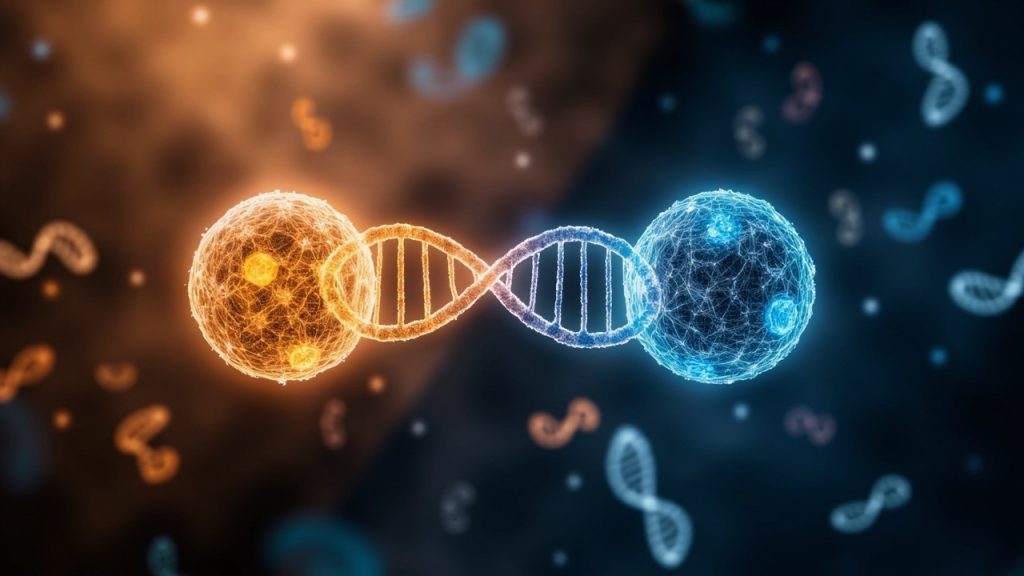
Every time your cells divide, a tiny molecular clock counts down toward your eventual demise. These microscopic timekeepers, called telomeres, sit at the ends of your chromosomes like protective caps on shoelaces. As you age, they gradually shrink, and when they become critically short, your cells can no longer divide properly. This cellular aging process lies at the heart of why we grow old, develop age-related diseases, and ultimately face mortality.
Understanding telomeres and aging has revolutionized how scientists view the aging process. Rather than accepting aging as an inevitable decline, researchers now see it as a biological mechanism that might be measurable, predictable, and potentially modifiable. The discovery of telomeres earned Elizabeth Blackburn, Carol Greider, and Jack Szostak the 2009 Nobel Prize in Physiology or Medicine, marking a turning point in longevity research.
Your telomere length doesn’t just reflect your chronological age—it reveals your biological age and may predict how long you’ll live. This groundbreaking insight has opened new possibilities for anti-aging interventions, personalized medicine, and lifestyle modifications that could extend both lifespan and healthspan.
What Are Telomeres and Why Do They Control Aging
Telomeres are protective DNA-protein structures located at the ends of chromosomes in every cell of your body. Think of them as the plastic tips on shoelaces that prevent the laces from fraying—except in this case, they prevent your genetic material from deteriorating during cell division. Each telomere consists of repetitive DNA sequences (TTAGGG in humans) that don’t code for any proteins but serve a crucial protective function.
These cellular guardians work alongside an enzyme called telomerase, which can add new DNA sequences to telomeres and potentially reverse their shortening. However, most adult human cells produce very little telomerase, which is why telomeres gradually shorten with each cell division. This limitation appears to be an evolutionary trade-off—while short telomeres contribute to aging, unlimited telomerase activity could lead to uncontrolled cell growth and cancer.
Research from the University of California, San Francisco (UCSF) has shown that telomere length varies significantly between individuals of the same chronological age. Some 60-year-olds have telomeres resembling those of 40-year-olds, while others show accelerated shortening that corresponds with premature aging and increased disease risk. This variation suggests that biological aging occurs at different rates and may be influenced by factors beyond genetics.
The relationship between telomeres and aging extends beyond simple cell division. When telomeres become critically short, cells enter a state called senescence, where they stop dividing but remain metabolically active. These senescent cells can secrete inflammatory molecules that damage surrounding healthy tissue, contributing to age-related diseases like cardiovascular disease, diabetes, and neurodegenerative disorders.
The Science Behind Telomeres and Aging: How Your Cells Count Down
Every time a cell divides, it faces the “end-replication problem”—DNA polymerase, the enzyme responsible for copying DNA, cannot fully replicate the very ends of chromosomes. This means that with each cell division, telomeres lose approximately 50-200 base pairs of DNA. It’s like photocopying a document repeatedly; each copy loses a little bit at the edges until eventually important information gets cut off.
Scientists have identified this process as the cellular aging clock. Studies published in Nature have demonstrated that telomere shortening follows a predictable pattern throughout human life. Newborns typically have telomeres around 10,000-15,000 base pairs long, while adults lose about 31-60 base pairs per year. When telomeres shrink to approximately 4,000-7,000 base pairs, cells approach their division limit, known as the Hayflick limit.
The molecular mechanisms behind telomere-driven aging involve complex cellular pathways. As telomeres shorten, they activate DNA damage checkpoints that trigger cellular responses. Initially, cells attempt to repair the damage, but when telomeres become critically short, they send signals that either force the cell into senescence or trigger programmed cell death (apoptosis). This process affects tissue regeneration, organ function, and overall health.
Recent research has revealed that telomere dysfunction doesn’t just affect individual cells—it has systemic consequences. Short telomeres in immune cells, for example, can compromise your body’s ability to fight infections and cancer. Similarly, shortened telomeres in stem cells reduce their regenerative capacity, affecting tissue repair and maintenance throughout your body. This helps explain why aging involves multiple organ systems simultaneously rather than isolated changes.
Telomere Length Testing: Can You Predict Your Lifespan
Modern biotechnology has made it possible to measure your telomere length through simple blood tests, saliva samples, or cheek swabs. Several companies now offer direct-to-consumer telomere testing, promising insights into your biological age and longevity potential. These tests typically measure the average telomere length in white blood cells and compare your results to age-matched populations to determine whether your cellular aging is accelerated, normal, or slower than average.
However, the predictive power of telomere testing remains a subject of scientific debate. While studies have shown correlations between shorter telomeres and increased mortality risk, individual predictions are complex. A comprehensive analysis published in Nature found that telomere length accounts for only a small percentage of lifespan variation between individuals. Factors like genetics, lifestyle, environmental exposures, and access to healthcare play equally important roles in determining longevity.
The interpretation of telomere test results requires careful consideration. Having shorter-than-average telomeres doesn’t guarantee poor health outcomes, just as longer telomeres don’t ensure longevity. Multiple factors influence the relationship between telomere length and health outcomes, including telomerase activity, cellular repair mechanisms, and overall genetic background. Some individuals with naturally shorter telomeres maintain excellent health through other protective factors.
For those interested in exploring their biological age markers, epigenetic clock aging explained offers additional insights into cellular aging mechanisms beyond telomeres. These complementary approaches can provide a more comprehensive picture of your aging process and help guide personalized health strategies.
Lifestyle Factors That Accelerate Telomere Shortening
Your daily choices significantly impact the rate at which your telomeres shorten, effectively controlling how fast you age at the cellular level. Chronic stress stands out as one of the most powerful accelerators of telomere shortening. Research from UCSF showed that women caring for chronically ill children had telomeres equivalent to being 10 years older than their chronological age, demonstrating how psychological stress translates into biological aging.
Poor dietary habits contribute substantially to accelerated telomere shortening. Diets high in processed foods, refined sugars, and trans fats create chronic inflammation and oxidative stress that damage telomeres. A study following 4,676 women found that those consuming the most processed meats had significantly shorter telomeres compared to those eating minimal processed foods. Similarly, excessive alcohol consumption and smoking have been consistently linked to accelerated telomere shortening and premature cellular aging.
Sedentary lifestyle patterns also accelerate the cellular aging process. People who engage in less than 150 minutes of moderate exercise per week show faster telomere shortening compared to their more active counterparts. The lack of physical activity affects multiple biological pathways that protect telomeres, including reduced antioxidant production, increased inflammation, and impaired cellular repair mechanisms.
Environmental factors play an equally important role in telomere health. Exposure to air pollution, heavy metals, pesticides, and other toxins can accelerate telomere shortening through increased oxidative stress and DNA damage. Urban residents often show faster telomere shortening compared to those living in cleaner environments, highlighting the importance of environmental quality in cellular aging. Sleep deprivation, shift work, and circadian rhythm disruption also contribute to accelerated telomere shortening by interfering with cellular repair processes that typically occur during rest.
Natural Ways to Protect and Lengthen Your Telomeres
The encouraging news about telomeres and aging is that certain lifestyle interventions can slow down or even reverse telomere shortening. Regular physical exercise emerges as one of the most powerful natural interventions for telomere protection. Studies show that people who engage in vigorous aerobic exercise for at least 75 minutes per week have telomeres that are up to 9 years younger than sedentary individuals. The protective effect appears to result from exercise-induced increases in telomerase activity and improved cellular repair mechanisms.
Stress management techniques have demonstrated remarkable effects on telomere preservation. A landmark study found that women who participated in an 8-week mindfulness-based stress reduction program showed increased telomerase activity of 17%. Meditation, yoga, deep breathing exercises, and other stress-reduction practices appear to activate cellular pathways that protect and potentially lengthen telomeres. The key lies in consistency—regular practice yields the most significant benefits.
Nutritional interventions can significantly impact telomere health. Omega-3 fatty acids, particularly EPA and DHA found in fish oil, have been associated with longer telomeres and slower aging. A Mediterranean-style diet rich in fruits, vegetables, whole grains, and healthy fats provides antioxidants and anti-inflammatory compounds that protect telomeres from damage. Specific nutrients like vitamin D, folate, and magnesium have also shown positive associations with telomere length.
Quality sleep plays a crucial role in telomere maintenance and cellular repair. Adults who consistently get 7-9 hours of restorative sleep show better telomere preservation compared to those with chronic sleep deprivation. During deep sleep phases, your body produces growth hormone and activates DNA repair mechanisms that help maintain telomere integrity. For comprehensive strategies on cellular age optimization, explore how to reduce biological age through evidence-based lifestyle modifications.
Medical Breakthroughs in Telomeres and Aging Research
The field of telomere research has witnessed remarkable advances since the Nobel Prize-winning discoveries of the early 2000s. Scientists have developed sophisticated techniques for measuring telomerase activity and identifying compounds that can enhance this crucial enzyme. Recent studies have shown that certain pharmaceutical interventions can temporarily increase telomerase activity in human cells, offering potential therapeutic approaches for age-related diseases.
Gene therapy approaches targeting telomere biology have shown promising results in laboratory studies. Researchers have successfully used viral vectors to deliver telomerase genes to specific cell types, effectively extending their lifespan and improving function. While still in experimental phases, these approaches could eventually help treat age-related diseases by restoring the regenerative capacity of aged tissues and organs.
Clinical trials investigating telomerase activators are currently underway for various age-related conditions. Compounds like TA-65, derived from the Chinese herb Astragalus, have shown modest effects on telomerase activity in human studies. While results have been mixed and effects relatively small, these research efforts are providing valuable insights into the safety and efficacy of telomere-targeted interventions.
Stem cell research has also benefited from telomere discoveries. Scientists can now rejuvenate aged stem cells by restoring their telomere length, potentially improving their therapeutic potential. This research may lead to more effective regenerative medicine approaches for treating age-related degenerative diseases, including heart disease, neurodegeneration, and tissue damage from injury or disease.
The Future of Anti-Aging: Telomere Therapy and Longevity Medicine
The future of anti-aging medicine increasingly focuses on telomere biology as a therapeutic target. Researchers are developing next-generation approaches that could safely enhance telomerase activity in specific cell types while avoiding the cancer risks associated with unlimited cellular proliferation. These precision medicine approaches aim to restore telomere length in aged tissues without compromising cellular safety mechanisms.
Personalized medicine based on telomere profiles is becoming more sophisticated. Future healthcare may include regular telomere monitoring as part of routine health assessments, similar to how we currently track cholesterol or blood pressure. This information could guide personalized interventions, medication dosing, and lifestyle recommendations tailored to individual cellular aging patterns.
Combination therapies targeting multiple aging mechanisms simultaneously show particular promise. Rather than focusing solely on telomeres, future anti-aging approaches will likely combine telomere therapy with interventions targeting cellular senescence, mitochondrial function, protein aggregation, and other hallmarks of aging. This comprehensive approach could provide more substantial and sustained anti-aging effects.
The integration of artificial intelligence and machine learning in telomere research is accelerating discovery and development timelines. Advanced algorithms can now predict which compounds might enhance telomerase activity, identify optimal dosing strategies, and model potential side effects before clinical testing. For those curious about their current aging trajectory, tools like the death clock provide insights into longevity predictions based on current health and lifestyle factors.
Understanding telomeres and aging represents one of the most significant advances in longevity science, offering both insights into why we age and potential pathways for intervention. While we cannot yet completely halt cellular aging, the growing body of research provides clear evidence that lifestyle modifications can significantly influence the rate at which our telomeres shorten and our cells age.
The key takeaway is that aging is not entirely predetermined by genetics—your daily choices regarding diet, exercise, stress management, and sleep quality directly impact your cellular aging process. Whether through natural lifestyle interventions or future medical breakthroughs, the promise of telomere research lies in transforming aging from an inevitable decline into a modifiable biological process.
As research continues to advance, the future may hold even more powerful tools for maintaining telomere health and extending healthy human lifespan. Until then, the most effective strategy involves adopting evidence-based lifestyle practices that support cellular health and optimize the natural protective mechanisms your body already possesses. Your telomeres are counting down, but with the right approach, you can influence how fast that countdown proceeds.