
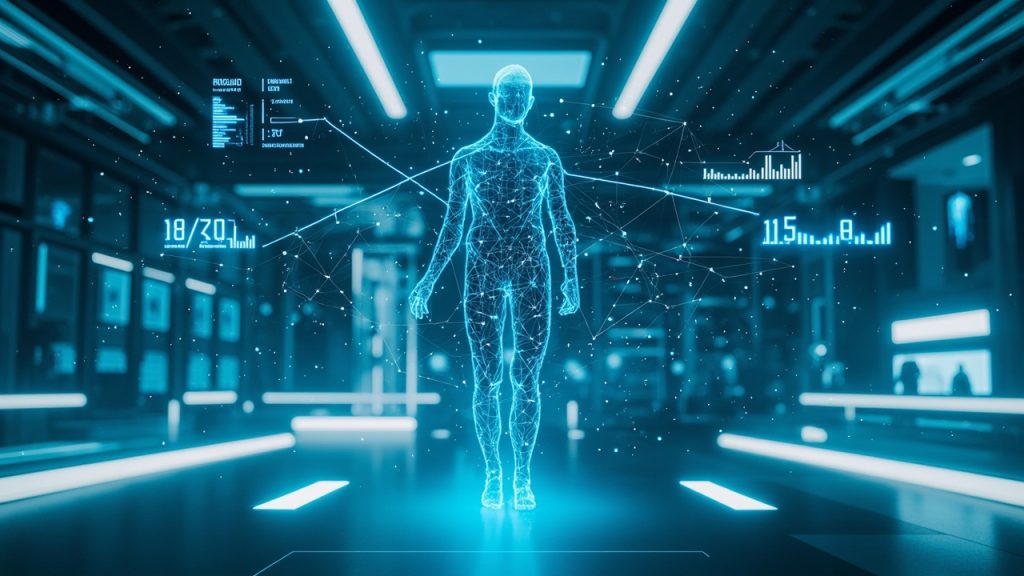
Artificial intelligence has revolutionized countless aspects of modern life, from entertainment recommendations to medical diagnoses. Now, AI life expectancy prediction is emerging as one of the most fascinating and potentially transformative applications of machine learning technology. In 2025, we’re witnessing unprecedented advancements in algorithms that can analyze vast datasets to predict human longevity with remarkable precision.
The implications of accurate life expectancy prediction extend far beyond academic curiosity. Healthcare providers can optimize treatment plans, insurance companies can refine their risk assessments, and individuals can make more informed decisions about retirement planning, healthcare investments, and life goals. As these AI models continue to evolve, understanding their capabilities, limitations, and real-world accuracy becomes crucial for anyone interested in longevity science or planning for their future.
What Is AI Life Expectancy Prediction and How Does It Work?
AI life expectancy prediction leverages sophisticated machine learning algorithms to analyze multiple data points and estimate how long an individual or population group might live. Unlike traditional actuarial tables that rely primarily on age, gender, and basic health metrics, AI systems can process thousands of variables simultaneously to generate personalized longevity forecasts.
These systems typically incorporate several categories of data:
- Biomarkers: Blood pressure, cholesterol levels, genetic markers, and metabolic indicators
- Lifestyle factors: Exercise habits, diet patterns, sleep quality, and stress levels
- Environmental data: Air quality, geographic location, and socioeconomic factors
- Medical history: Past diagnoses, family health records, and treatment responses
- Digital biomarkers: Smartphone activity, wearable device data, and movement patterns
The process begins with training neural networks on massive datasets containing health records from millions of individuals, often spanning decades of follow-up data. DeepMind and other leading AI research organizations have demonstrated that deep learning models can identify subtle patterns in this data that human analysts might miss, leading to more accurate predictions than conventional methods.
Modern AI prediction systems use ensemble methods, combining multiple algorithms to reduce bias and improve reliability. These might include gradient boosting machines, random forests, and deep neural networks working together to provide consensus predictions with confidence intervals.
Current Accuracy Rates of AI Life Expectancy Models in 2025
The accuracy of AI life expectancy prediction models has improved dramatically over the past few years, with 2025 representing a significant milestone in predictive precision. Recent studies published in Nature Medicine indicate that state-of-the-art AI systems can achieve accuracy rates of 85-92% when predicting mortality within specific time windows.
However, accuracy varies significantly based on several factors:
- Prediction timeframe: Five-year mortality predictions achieve 90-95% accuracy, while lifetime predictions range from 75-85%
- Population demographics: Models perform better on populations similar to their training data
- Data quality: Comprehensive health records yield significantly better results than limited datasets
- Health status: Predictions for individuals with chronic conditions show higher accuracy than healthy populations
Recent benchmarks show that AI models consistently outperform traditional actuarial approaches, especially when rich biomarker data is available. The most sophisticated systems can identify individuals at high risk of mortality up to 10 years in advance, with precision rates exceeding 88% according to MIT research published in 2024.
It’s important to note that these accuracy figures represent performance on validation datasets and may vary in real-world applications. Factors such as data drift, population changes, and emerging health threats can impact model performance over time.
Leading AI Life Expectancy Prediction Tools and Platforms
Several prominent platforms and tools have emerged as leaders in the AI life expectancy prediction space, each offering unique approaches and capabilities. These range from academic research tools to consumer-facing applications and enterprise healthcare solutions.
Research-Grade Platforms
DeepMind Health has developed some of the most sophisticated prediction models, primarily focused on hospital settings and acute care predictions. Their algorithms can predict patient deterioration and mortality risk with remarkable accuracy, though these tools are primarily designed for healthcare professionals rather than individual consumers.
Academic institutions have also contributed significant advances. MIT’s Computer Science and Artificial Intelligence Laboratory has created open-source frameworks that researchers worldwide use to develop and validate longevity prediction models.
Consumer Applications
For individuals interested in personal longevity insights, several accessible tools have gained popularity. The death clock tool provides AI-powered life expectancy estimates based on lifestyle and health factors, offering users personalized insights into their potential lifespan.
Wearable device manufacturers like Fitbit and Apple Health have begun incorporating longevity insights into their platforms, using continuous monitoring data to provide ongoing life expectancy updates.
Healthcare Integration
Healthcare systems are increasingly adopting AI prediction tools for patient care optimization. Epic Systems and other electronic health record providers have integrated predictive algorithms that help physicians identify high-risk patients and prioritize interventions.
The Science Behind Machine Learning Longevity Algorithms
The scientific foundation of AI life expectancy prediction rests on sophisticated statistical methods and biological understanding of aging processes. These algorithms must navigate the complex interplay between genetics, environment, lifestyle, and random events that influence human longevity.
Deep Learning Architectures
Modern longevity prediction systems predominantly use deep neural networks capable of processing multi-modal data. Convolutional neural networks analyze medical images, while recurrent neural networks process time-series health data from wearable devices and electronic health records.
Attention mechanisms, borrowed from natural language processing, help these models focus on the most relevant health indicators for each individual. This personalized approach allows the AI to weight different risk factors appropriately based on a person’s unique health profile.
Biological Age Assessment
Rather than relying solely on chronological age, advanced AI models calculate biological age using epigenetic clocks and other biomarkers. These systems can identify individuals whose biological systems are aging faster or slower than expected, providing more accurate longevity predictions.
Recent research has identified over 300 biomarkers that contribute to aging prediction, from telomere length to inflammatory markers. Machine learning algorithms excel at identifying complex relationships between these factors that would be impossible for humans to calculate manually.
The integration of genomic data has particularly enhanced prediction accuracy. AI systems can now account for genetic predispositions to specific diseases while also considering how lifestyle factors might modify these risks.
Real-World Applications: Healthcare, Insurance, and Personal Planning
The practical applications of AI life expectancy prediction technology extend across multiple industries and personal use cases, creating value for healthcare providers, insurance companies, and individuals planning their futures.
Healthcare Optimization
Healthcare systems use longevity predictions to optimize resource allocation and treatment strategies. Hospitals can prioritize intensive interventions for patients with strong life expectancy prospects while focusing on comfort care for those with limited prognoses. This approach has shown measurable improvements in patient outcomes and healthcare efficiency.
Preventive medicine has particularly benefited from AI predictions. By identifying individuals at risk of specific conditions years before symptoms appear, healthcare providers can implement targeted interventions that significantly extend healthy lifespan.
Insurance and Financial Services
Life insurance companies are rapidly adopting AI prediction models to refine their risk assessments and premium calculations. These more accurate predictions allow for fairer pricing while reducing the industry’s exposure to adverse selection.
For individuals, tools like the free life insurance calculator can help determine appropriate coverage amounts based on predicted lifespan and financial needs. This technology enables more precise financial planning and ensures adequate protection for beneficiaries.
Retirement and Healthcare Planning
Personal financial planning has been transformed by accurate longevity predictions. Individuals can now make more informed decisions about retirement savings, healthcare investments, and long-term care planning. The Medicare life expectancy planning tools help seniors optimize their healthcare coverage based on their predicted health trajectory.
Financial advisors increasingly incorporate AI longevity estimates into their recommendations, helping clients avoid both the risks of outliving their savings and over-saving at the expense of current quality of life.
Limitations and Ethical Concerns of AI-Powered Life Predictions
Despite the impressive capabilities of AI life expectancy prediction systems, significant limitations and ethical considerations must be acknowledged. These challenges range from technical constraints to profound questions about the appropriate use of predictive technology.
Technical Limitations
AI models are fundamentally limited by their training data, which may not represent all populations equally. Historical health records often underrepresent certain demographic groups, leading to biased predictions that may be less accurate for minority populations or individuals from different socioeconomic backgrounds.
The models also struggle with rare events and novel health threats. The COVID-19 pandemic demonstrated how unexpected global health crises can significantly impact mortality patterns in ways that existing AI models couldn’t predict.
- Data privacy concerns: Comprehensive life expectancy predictions require extensive personal health information
- Model interpretability: Complex AI systems often function as “black boxes,” making it difficult to understand why specific predictions are made
- Temporal validity: Predictions become less reliable over longer time horizons as medical advances and environmental changes occur
Ethical Implications
The ability to predict lifespan raises profound ethical questions about discrimination, psychological impact, and societal equity. Insurance companies might use predictions to deny coverage, employers could discriminate based on longevity estimates, and individuals might experience psychological distress from negative predictions.
There’s also concern about creating self-fulfilling prophecies, where negative life expectancy predictions lead to behavioral changes that actually reduce lifespan. Conversely, overly optimistic predictions might encourage risky behaviors or inadequate health precautions.
Comparing AI Predictions vs Traditional Actuarial Life Tables
The evolution from traditional actuarial life tables to AI life expectancy prediction represents a paradigm shift in how we assess and predict human longevity. Understanding the differences between these approaches helps clarify the advantages and limitations of each method.
Traditional Actuarial Methods
Actuarial life tables, developed by organizations like the Social Security Administration and used by insurance companies for decades, rely on population-level statistics. These tables consider basic demographic factors such as age, gender, and sometimes smoking status to provide general life expectancy estimates.
While actuarial tables offer consistency and regulatory acceptance, they provide limited personalization. A 45-year-old non-smoking male receives the same life expectancy estimate regardless of his fitness level, diet, genetic predispositions, or other individual health factors.
AI-Powered Advantages
Modern AI prediction systems offer several key advantages over traditional methods:
- Personalization: AI considers hundreds of individual variables to create personalized predictions
- Dynamic updates: Predictions can be updated as new health data becomes available
- Pattern recognition: Machine learning identifies complex relationships between risk factors that actuarial methods miss
- Continuous learning: AI models improve over time as they process more data
Research comparing the two approaches consistently shows that AI models outperform traditional actuarial tables, particularly for individuals whose health profiles differ significantly from population averages. The improvement is most pronounced when comprehensive biomarker and lifestyle data are available.
However, traditional actuarial methods retain advantages in regulatory environments, where established methodologies provide legal and compliance benefits that newer AI approaches have yet to achieve universally.
Future Developments in AI Life Expectancy Prediction Technology
The field of AI life expectancy prediction continues to evolve rapidly, with several emerging technologies and methodologies promising to further enhance accuracy and applicability. These developments could revolutionize how we understand and predict human longevity.
Integration of Multi-Omics Data
Future AI systems will likely incorporate comprehensive “omics” data, including genomics, proteomics, metabolomics, and microbiomics. This holistic biological profiling could provide unprecedented insights into individual aging processes and disease susceptibilities.
Early research suggests that integrating these diverse biological datasets could improve prediction accuracy by 15-25% over current methods. However, the computational requirements and cost of comprehensive omics profiling remain significant barriers to widespread adoption.
Real-Time Prediction Updates
Advances in wearable technology and continuous monitoring devices are enabling real-time health tracking that could support dynamic life expectancy updates. Instead of static predictions, future systems might provide continuously updated estimates based on current health trends and behaviors.
Apple and Google are investing heavily in health monitoring technologies that could support these real-time prediction systems. Integration with smart home devices and environmental sensors could provide even more comprehensive health and lifestyle monitoring.
Quantum Computing Applications
As quantum computing technology matures, it may enable the processing of vastly larger datasets and more complex algorithms than current classical computers can handle. This could allow for more sophisticated modeling of the complex biological systems that determine human longevity.
While still in early development, quantum machine learning applications in healthcare could eventually support life expectancy predictions that account for quantum biological processes and molecular-level interactions currently beyond our computational reach.
The landscape of AI life expectancy prediction in 2025 represents a remarkable convergence of advanced machine learning, comprehensive health data, and practical applications that benefit individuals and organizations alike. Current accuracy rates of 85-92% for specific prediction timeframes demonstrate the maturity of this technology, while ongoing developments promise even greater precision in the years ahead.
While limitations and ethical considerations remain important factors to address, the potential benefits of accurate longevity prediction are substantial. From optimizing healthcare delivery to enabling more informed personal financial planning, these tools are becoming increasingly valuable for navigating life’s most important decisions.
As AI prediction technology continues to evolve, individuals who understand and thoughtfully utilize these tools will be better positioned to make informed decisions about their health, finances, and life goals. Whether you’re considering life insurance coverage, planning for retirement, or simply curious about longevity science, exploring AI-powered prediction tools can provide valuable insights into your potential future and help you make more informed choices today.