
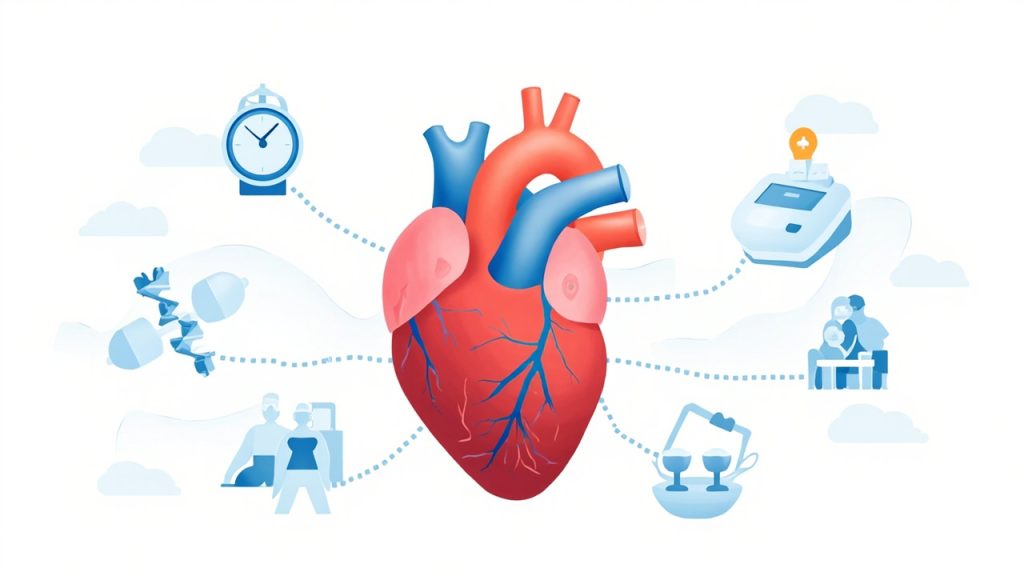
Heart disease remains the leading cause of death globally, claiming approximately 17.9 million lives annually according to the World Health Organization. Despite these staggering statistics, many individuals remain unaware of their personal risk level until it’s too late. Understanding heart disease risk factors is crucial for prevention and early intervention, potentially adding years to your life expectancy. The reality is that cardiovascular disease doesn’t develop overnight – it’s typically the result of multiple risk factors accumulating over time. Some of these factors are beyond your control, like genetics and age, while others are directly influenced by your lifestyle choices. By identifying your personal risk profile and taking proactive steps, you can significantly reduce your chances of developing heart disease. This comprehensive guide will help you understand the various risk factors, recognize warning signs, and provide you with a simple assessment tool to evaluate your current heart health status. Taking control of your cardiovascular health starts with knowledge and awareness.
Understanding Heart Disease Risk Factors: What Every Person Should Know
Heart disease encompasses a range of cardiovascular conditions that affect the heart’s structure and function. The term “risk factors” refers to specific characteristics, behaviors, or conditions that increase your likelihood of developing heart disease. These factors work synergistically, meaning having multiple risk factors exponentially increases your overall risk rather than simply adding to it.
The American Heart Association categorizes heart disease risk factors into two primary groups: modifiable and non-modifiable. Non-modifiable risk factors include elements you cannot change, such as age, gender, family history, and genetic predisposition. Modifiable risk factors, on the other hand, are lifestyle-related elements within your control, including diet, physical activity, smoking habits, and stress management.
Recent research published in the Journal of the American College of Cardiology shows that individuals with multiple risk factors have up to a 50% higher chance of developing coronary heart disease compared to those with optimal risk profiles. Understanding this multiplicative effect is essential because it emphasizes why addressing even one modifiable risk factor can significantly impact your overall cardiovascular health.
The Mayo Clinic emphasizes that heart disease risk assessment should be an ongoing process throughout your life, as risk factors can change over time. What makes someone low-risk in their 30s may shift dramatically by their 50s due to lifestyle changes, hormonal fluctuations, or the development of other health conditions.
The Most Common Heart Disease Risk Factors You Can’t Control
While it may seem frustrating to discuss factors beyond your control, understanding non-modifiable risk factors helps you make more informed decisions about the elements you can influence. Age is perhaps the most significant non-modifiable risk factor, with heart disease risk increasing substantially after age 45 for men and 55 for women.
Gender plays a crucial role in cardiovascular risk. Men typically develop heart disease 7-10 years earlier than women, largely due to the protective effects of estrogen before menopause. However, women’s risk increases dramatically after menopause, eventually equalizing with men’s risk by age 70. This shift highlights the importance of hormone-related cardiovascular protection.
Family history represents another critical non-modifiable factor. If you have a first-degree relative (parent, sibling, or child) who developed heart disease before age 55 (for men) or 65 (for women), your risk increases by 40-60%. This genetic predisposition often involves inherited conditions affecting cholesterol metabolism, blood pressure regulation, or inflammation responses.
Race and ethnicity also influence cardiovascular risk patterns. According to CDC data, African Americans have higher rates of high blood pressure and diabetes, leading to increased heart disease risk. Similarly, individuals of South Asian descent show higher rates of premature coronary artery disease, often linked to genetic factors affecting lipid metabolism and insulin sensitivity.
Lifestyle Heart Disease Risk Factors That Increase Your Chances
The encouraging news about heart disease risk factors is that many of the most impactful ones are completely within your control. Smoking stands as one of the most dangerous modifiable risk factors, increasing heart disease risk by 2-4 times. The chemicals in tobacco damage blood vessel walls, promote blood clot formation, and reduce oxygen delivery to the heart muscle.
Poor dietary choices contribute significantly to cardiovascular risk through multiple pathways. Diets high in saturated fats, trans fats, and sodium promote atherosclerosis, raise blood pressure, and contribute to obesity. The Western dietary pattern, characterized by processed foods, red meat, and refined sugars, has been linked to a 30% increased risk of heart disease compared to Mediterranean-style eating patterns.
Physical inactivity represents another major modifiable risk factor. The American Heart Association recommends at least 150 minutes of moderate-intensity aerobic activity weekly. Individuals who fail to meet these guidelines have a 30-35% higher risk of developing heart disease. Sedentary behavior also contributes to obesity, diabetes, and high blood pressure – all independent risk factors for cardiovascular disease.
Excessive alcohol consumption, while complex in its relationship to heart health, generally increases cardiovascular risk when consumed in large quantities. Research indicates that heavy drinking (more than 14 drinks per week for men, 7 for women) significantly increases heart disease risk. Understanding the relationship between alcohol and life expectancy can help you make informed decisions about your consumption patterns.
How Age, Gender, and Genetics Influence Your Heart Health
The intersection of age, gender, and genetics creates a complex web of cardiovascular risk that varies significantly among individuals. As we age, several physiological changes occur that inherently increase heart disease risk. Arterial walls naturally become less elastic, blood pressure tends to rise, and the heart muscle may become less efficient at pumping blood.
Women experience unique age-related cardiovascular changes, particularly around menopause. The decline in estrogen production removes a significant protective factor against heart disease. Post-menopausal women see rapid increases in LDL cholesterol levels and blood pressure, often requiring more aggressive prevention strategies than younger women.
Genetic factors influence how age affects your cardiovascular system. Some individuals inherit genes that promote healthy aging of blood vessels, while others may have genetic variants that accelerate atherosclerosis or affect blood pressure regulation. Recent advances in genetic testing can identify specific cardiovascular risk genes, though lifestyle factors remain the primary determinant of outcomes.
The concept of “biological age” versus “chronological age” has gained prominence in cardiovascular research. Two individuals of the same chronological age may have vastly different biological ages based on their genetic makeup, lifestyle choices, and environmental exposures. This understanding emphasizes why personalized approaches to heart disease prevention are becoming increasingly important in modern medicine.
Warning Signs Your Body Is Telling You About Heart Disease
Recognizing early warning signs of heart disease can be life-saving, as many cardiovascular conditions develop gradually over years before producing obvious symptoms. Chest discomfort remains the most common symptom, but it doesn’t always present as the dramatic “Hollywood heart attack” scenario. Many people experience subtle pressure, squeezing, or aching sensations that may come and go.
Shortness of breath, particularly during activities that previously didn’t cause breathing difficulties, can signal developing heart problems. This symptom often appears months before more obvious signs and may initially be dismissed as aging or being “out of shape.” Progressive shortness of breath warrants immediate medical evaluation, especially when accompanied by fatigue or swelling.
Unusual fatigue represents another frequently overlooked warning sign, particularly in women. This isn’t typical tiredness from a busy day, but rather profound exhaustion that doesn’t improve with rest. Many heart attack survivors report experiencing unusual fatigue weeks or months before their cardiac event, highlighting the importance of listening to your body’s signals.
Other warning signs include irregular heartbeats, dizziness, nausea (especially when combined with other symptoms), pain radiating to the arms, neck, jaw, or back, and cold sweats. Women may experience different symptom patterns than men, including more subtle chest discomfort, back pain, and nausea. Understanding these gender differences in symptom presentation can lead to earlier recognition and treatment.
Heart Disease Risk Assessment: Take This Simple Test
Evaluating your personal heart disease risk factors doesn’t require complex medical equipment – a simple self-assessment can provide valuable insights into your cardiovascular health status. This evaluation considers both modifiable and non-modifiable risk factors to give you a comprehensive picture of your risk profile.
Family History Assessment: Award yourself 1 point if you have a parent or sibling who developed heart disease before age 65, or 2 points if they developed it before age 55. Add 1 additional point if multiple family members have cardiovascular disease.
Age and Gender Scoring: Men over 45 and women over 55 should add 1 point to their score. Add an additional point if you’re over 65, regardless of gender. Post-menopausal women should add 1 point if not using hormone replacement therapy.
Lifestyle Factor Evaluation: Add 2 points if you currently smoke, 1 point if you quit within the past year. Award 1 point each for: sedentary lifestyle (less than 150 minutes of exercise weekly), poor diet (frequent processed foods, high sodium), excessive alcohol consumption, and chronic high stress levels. Current diabetes adds 2 points, while pre-diabetes adds 1 point. Understanding how conditions like diabetes affect overall health, including diabetes and life expectancy, emphasizes the importance of managing these risk factors.
Interpreting Your Score: 0-2 points indicates low risk, 3-5 points suggests moderate risk requiring lifestyle modifications, and 6+ points indicates high risk necessitating immediate medical consultation and aggressive risk factor modification. This assessment tool can help you understand where you stand and motivate positive changes, but it shouldn’t replace professional medical evaluation. Consider using comprehensive health tools like a death clock calculator to better understand how lifestyle changes might impact your overall life expectancy.
Proven Ways to Lower Your Heart Disease Risk Starting Today
The most effective approach to reducing heart disease risk factors involves comprehensive lifestyle modifications that address multiple risk elements simultaneously. Dietary changes offer some of the most immediate and impactful benefits. Adopting a Mediterranean-style diet rich in fruits, vegetables, whole grains, lean proteins, and healthy fats can reduce heart disease risk by up to 30% according to multiple clinical trials.
Regular physical activity serves as a powerful medicine for cardiovascular health. Even modest increases in activity levels provide significant benefits – walking just 30 minutes daily can reduce heart disease risk by 35%. The key is consistency rather than intensity. Start with activities you enjoy and gradually increase duration and intensity as your fitness improves.
Stress management has emerged as a critical component of heart disease prevention. Chronic stress contributes to inflammation, high blood pressure, and unhealthy coping behaviors like overeating or smoking. Effective stress reduction techniques include meditation, regular exercise, adequate sleep, and maintaining strong social connections. Even 10 minutes of daily meditation can measurably reduce stress hormones and improve cardiovascular markers.
Sleep quality and duration significantly impact cardiovascular health. Adults who consistently sleep less than 6 hours or more than 9 hours per night show increased heart disease risk. Poor sleep quality contributes to high blood pressure, obesity, and diabetes. Establishing consistent sleep schedules, creating a sleep-conducive environment, and addressing sleep disorders like sleep apnea can substantially improve cardiovascular outcomes.
When to See a Doctor About Your Heart Health Concerns
Knowing when to seek medical attention for cardiovascular concerns can literally save your life. Any chest pain, especially when accompanied by shortness of breath, nausea, or radiation to the arms, neck, or jaw, requires immediate emergency evaluation. Don’t attempt to “tough it out” or assume symptoms will resolve on their own.
Schedule routine cardiovascular screening based on your age and risk factors. Adults over 20 should have cholesterol checked every 4-6 years, while those with risk factors may need more frequent monitoring. Blood pressure should be checked at least every two years for adults with normal readings, annually for those with elevated levels.
Certain symptoms warrant prompt but non-emergent medical evaluation: progressive shortness of breath during normal activities, unusual fatigue lasting more than a few days, irregular heartbeats or palpitations, dizziness or fainting episodes, and swelling in legs, ankles, or feet. These symptoms may indicate developing heart conditions that benefit from early intervention.
If your self-assessment revealed multiple heart disease risk factors, schedule a comprehensive cardiovascular evaluation with your healthcare provider. This might include advanced testing such as stress tests, echocardiograms, or coronary calcium scoring to better assess your risk. Early detection and intervention can prevent progression to more serious conditions and significantly improve long-term outcomes.
Understanding and managing heart disease risk factors represents one of the most important investments you can make in your long-term health and quality of life. While some risk factors like age, gender, and genetics remain beyond your control, the modifiable factors – smoking, diet, exercise, stress management, and regular medical care – offer tremendous opportunities for risk reduction. The key insight is that small, consistent changes often produce more sustainable benefits than dramatic lifestyle overhauls that prove difficult to maintain.
Remember that cardiovascular health exists on a spectrum, and it’s never too early or too late to begin making positive changes. Whether you scored low, moderate, or high on the risk assessment, taking proactive steps today can significantly impact your future cardiovascular health. The evidence overwhelmingly supports that lifestyle modifications can reduce heart disease risk by 80% or more when consistently applied.
Take action today by choosing one or two modifiable risk factors to address first. Whether that’s taking a daily walk, improving your diet, quitting smoking, or scheduling overdue medical checkups, every positive step moves you toward better cardiovascular health. Your heart – and your future self – will thank you for the investment in prevention and early intervention.