
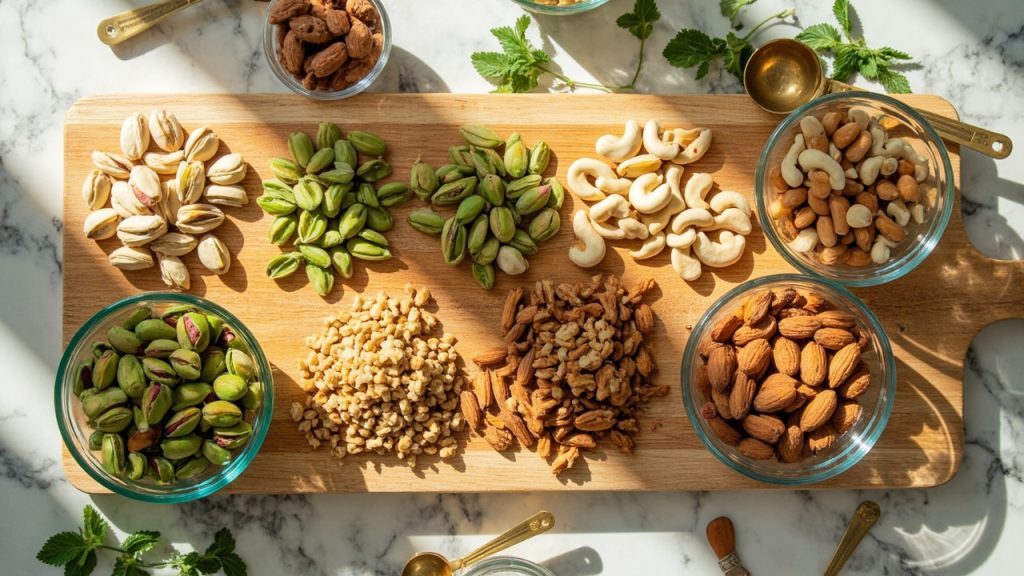
Whether you’re mindfully counting calories or simply curious about your favorite snack, understanding the calories in pistachios can transform how you approach portion control and nutritional planning. These vibrant green nuts have earned their reputation as both a satisfying treat and a nutritional powerhouse, but their caloric density might surprise you.
The relationship between pistachios and weight management isn’t straightforward—while they pack considerable calories per ounce, their unique protein and fiber composition creates a satiety effect that often prevents overconsumption. Recent research from the American Journal of Clinical Nutrition reveals that the act of shelling pistachios naturally slows eating pace, leading to better portion awareness compared to pre-shelled nuts.
For health-conscious individuals tracking their daily intake, knowing exactly how many calories you’re consuming becomes crucial for maintaining dietary goals. Just like being mindful of calorie counts at popular restaurant chains, understanding pistachio nutrition helps you make informed decisions without sacrificing the foods you enjoy.
How Many Calories Are in Pistachios Per Serving
A standard one-ounce serving of pistachios contains approximately 159 calories, according to the United States Department of Agriculture’s nutritional database. This translates to roughly 49 kernels or about 28 grams by weight. However, the way you measure your portion significantly impacts your actual caloric intake.
When pistachios are sold in-shell, that same one-ounce serving weight includes the shells, meaning you’re getting fewer actual nuts and therefore fewer calories—approximately 125-130 calories per ounce of in-shell pistachios. This natural portion control mechanism makes shelled pistachios a popular choice among dietitians and nutritionists.
For practical everyday measurements, consider these common serving sizes and their corresponding calories in pistachios:
- 1/4 cup shelled pistachios: 170-180 calories
- 2 tablespoons: 95-100 calories
- Small handful (about 30 nuts): 100 calories
- 100-gram portion: 560 calories
The slight variations in calorie counts depend on factors like nut size, moisture content, and processing methods. Brands may differ by 5-10 calories per serving, but these differences rarely impact overall dietary planning significantly.
Calories in Pistachios vs Other Popular Nuts
Comparing pistachios to other tree nuts reveals interesting patterns in caloric density and nutritional profiles. Per one-ounce serving, pistachios actually contain fewer calories than most popular nuts, making them a relatively lighter choice for snacking.
Here’s how calories in pistachios stack up against other common nuts:
- Macadamia nuts: 204 calories per ounce
- Pecans: 196 calories per ounce
- Brazil nuts: 186 calories per ounce
- Walnuts: 185 calories per ounce
- Hazelnuts: 178 calories per ounce
- Almonds: 164 calories per ounce
- Pistachios: 159 calories per ounce
- Cashews: 157 calories per ounce
Beyond raw calorie counts, pistachios offer unique advantages in satiety and eating behavior. Research published in Appetite journal demonstrates that the physical act of shelling pistachios increases meal satisfaction while reducing total caloric intake by an average of 18% compared to pre-shelled nuts.
The protein content in pistachios also ranks among the highest of tree nuts, with 6 grams per ounce compared to almonds’ 6 grams and walnuts’ 4 grams. This protein density contributes to feelings of fullness that can help manage overall daily caloric intake.
The Nutritional Breakdown Beyond Calories in Pistachios
While understanding calories in pistachios provides important context for dietary planning, the complete nutritional profile reveals why these nuts deserve consideration beyond mere calorie counting. Each one-ounce serving delivers a comprehensive array of essential nutrients that support various bodily functions.
The macronutrient distribution in pistachios creates an ideal balance for sustained energy and satiety:
- Protein: 6 grams (12% of total calories)
- Carbohydrates: 8 grams (20% of total calories)
- Dietary fiber: 3 grams
- Total fat: 13 grams (68% of total calories)
- Saturated fat: 1.6 grams
- Monounsaturated fat: 7.3 grams
The micronutrient profile of pistachios stands out among tree nuts, particularly for vitamin B6, thiamine, and potassium content. A single ounce provides approximately 25% of the daily recommended vitamin B6 intake, crucial for protein metabolism and cognitive function.
Key vitamins and minerals per ounce include:
- Potassium: 285mg (supporting heart health)
- Phosphorus: 139mg (bone health)
- Magnesium: 34mg (muscle and nerve function)
- Vitamin K: 4mcg (blood clotting)
- Folate: 14mcg (cellular function)
The antioxidant compounds in pistachios, including lutein, zeaxanthin, and gamma-tocopherol, contribute additional health benefits without adding calories. These compounds support eye health and provide cellular protection against oxidative stress.
Portion Control: Managing Pistachio Calories in Your Diet
Successfully incorporating pistachios into a calorie-conscious diet requires strategic portion management and mindful eating practices. The high caloric density means that even small measurement errors can significantly impact daily totals, but several proven techniques can help maintain appropriate serving sizes.
Pre-portioning represents the most effective strategy for controlling calories in pistachios. Divide large containers into individual serving bags containing exactly one ounce (28 grams) or about 49 kernels. This eliminates guesswork and prevents the common tendency to pour larger portions directly from bulk containers.
Visual cues provide practical alternatives when measuring tools aren’t available:
- Cupped palm: Approximately one serving for most adults
- Shot glass: Holds close to one ounce of shelled pistachios
- Standard ice cream scoop: Two level scoops equal roughly one serving
- Tablespoon measure: Four level tablespoons approximate one ounce
The “pistachio principle,” documented by behavioral nutrition researchers, leverages the natural portion control built into in-shell nuts. Keeping empty shells visible during snacking creates a visual reminder of consumption quantity, typically reducing intake by 20-25% compared to eating pre-shelled varieties.
Integration with meal planning helps balance pistachio calories within daily targets. Consider replacing higher-calorie snacks or using pistachios as salad toppers, yogurt mix-ins, or strategic pre-meal protein sources. Much like being mindful of choices when ordering seasonal menu items, planning pistachio portions in advance prevents impulsive overconsumption.
Timing consumption strategically can maximize satiety benefits while minimizing caloric impact. Eating pistachios 30 minutes before meals helps activate satiety signals, potentially reducing overall meal calories by 15-20% according to appetite research studies.
Do Roasted and Raw Pistachios Have Different Calorie Counts
The processing method used for pistachios creates minimal differences in calorie content, but understanding these variations helps make informed choices based on dietary preferences and nutritional goals. Raw and roasted pistachios contain essentially identical calories in pistachios per serving, with differences typically falling within 5-10 calories per ounce.
Raw pistachios contain approximately 159 calories per ounce, while dry-roasted varieties contain 161-164 calories per ounce. The slight increase results from moisture loss during roasting, which concentrates the caloric density slightly. Oil-roasted pistachios may contain 165-170 calories per ounce, depending on the type and amount of oil used in processing.
Salted versus unsalted varieties show no meaningful caloric differences, as salt adds negligible calories. However, sodium content varies dramatically:
- Unsalted pistachios: 0-2mg sodium per ounce
- Lightly salted: 85-115mg sodium per ounce
- Regular salted: 115-140mg sodium per ounce
- Heavily salted varieties: 150-200mg sodium per ounce
Flavored pistachio varieties can significantly impact calorie counts. Honey-roasted, chocolate-covered, or seasoned options may contain 180-250 calories per ounce, representing a 25-50% increase over plain varieties. These additions also alter the macronutrient profile by increasing sugar and sometimes saturated fat content.
From a nutritional standpoint, raw pistachios retain slightly higher levels of heat-sensitive vitamins, particularly vitamin C and some B vitamins. However, roasting may actually increase the bioavailability of certain antioxidants and healthy fats, creating a trade-off rather than a clear nutritional winner.
For individuals focused primarily on calorie management, the processing method matters less than portion control and overall dietary context. Choose based on taste preferences and dietary sodium restrictions rather than caloric concerns.
Health Benefits That Make Pistachio Calories Worth It
Despite their caloric density, pistachios deliver substantial health returns that justify their inclusion in balanced diets. Research consistently demonstrates that the nutritional quality of calories in pistachios provides benefits extending far beyond basic energy provision.
Cardiovascular health improvements represent the most well-documented benefit of regular pistachio consumption. A 2020 systematic review in Nutrients journal found that eating pistachios 3-5 times per week was associated with:
- 8-12% reduction in LDL cholesterol levels
- Improved endothelial function (blood vessel health)
- Lower blood pressure in individuals with pre-hypertension
- Reduced inflammation markers like C-reactive protein
Weight management benefits emerge from pistachios’ unique combination of protein, fiber, and healthy fats. Despite their caloric content, multiple studies show that people who regularly consume nuts, including pistachios, tend to have lower body mass indices and smaller waist circumferences compared to non-consumers.
The blood sugar regulation properties of pistachios make them particularly valuable for individuals managing diabetes or prediabetes. The protein and fiber content helps slow glucose absorption, preventing sharp spikes in blood sugar levels after meals. Research published in Diabetes Care demonstrated that replacing refined carbohydrate snacks with pistachios improved long-term glycemic control.
Eye health benefits stem from pistachios’ high content of lutein and zeaxanthin, antioxidants that accumulate in retinal tissue. Regular consumption may help protect against age-related macular degeneration and cataracts, conditions that affect millions of adults worldwide.
For individuals exploring comprehensive health approaches, understanding how different interventions work together becomes important. Just as some people research innovative treatments for weight management, incorporating nutrient-dense foods like pistachios represents a foundational strategy for long-term wellness.
Cognitive function improvements have been observed in studies examining regular nut consumption, with pistachios contributing beneficial vitamin E, healthy fats, and B vitamins that support brain health and may help prevent cognitive decline with aging.
Smart Ways to Enjoy Pistachios Without Calorie Overload
Maximizing the nutritional benefits of pistachios while managing caloric impact requires strategic incorporation techniques that enhance satiety and prevent overconsumption. These evidence-based approaches help you enjoy pistachios as part of a balanced diet without derailing weight management goals.
Combining pistachios with high-volume, low-calorie foods creates satisfying snacks that feel substantial while controlling total calories in pistachios consumed. Effective pairing strategies include:
- Mixed with fresh fruit: 1/2 ounce pistachios with an apple (total ~150 calories)
- Sprinkled on Greek yogurt: 1/4 ounce pistachios with 6 oz plain yogurt (~180 calories)
- Added to large salads: 1/4 ounce as a protein-rich topping (~40 calories)
- Blended into smoothies: 1/2 ounce for texture and healthy fats (~80 calories)
Meal replacement applications allow for higher pistachio portions while maintaining caloric balance. A breakfast combining 1 ounce pistachios, 1 cup berries, and 1/2 cup oatmeal provides sustained energy for approximately 300 calories total.
Strategic timing optimizes pistachios’ natural appetite-suppressing effects. Consuming a small portion (1/4 to 1/2 ounce) 20-30 minutes before meals can reduce subsequent food intake by 15-20%, effectively offsetting the nuts’ caloric contribution.
Hydration enhancement involves pairing pistachio consumption with adequate water intake. The nuts’ fiber and protein content work synergistically with hydration to promote satiety, helping prevent the mindless snacking that often leads to calorie overconsumption.
Preparation methods that slow consumption naturally regulate portion sizes:
- Choose in-shell varieties whenever possible for built-in portion control
- Mix with lower-calorie nuts like chestnuts or pine nuts to reduce density
- Create trail mix combinations using pistachios as one component rather than the primary ingredient
- Use as recipe ingredients in dishes where they add flavor and nutrition without becoming the caloric focus
Mindful eating practices transform pistachio consumption from mindless snacking into intentional nutrition. Eating slowly, chewing thoroughly, and paying attention to hunger and fullness cues helps maximize satisfaction from smaller portions.
Understanding calories in pistachios empowers you to make informed decisions that align with your nutritional goals and lifestyle preferences. With 159 calories per ounce, pistachios deliver exceptional nutritional value through their protein, healthy fats, fiber, and essential micronutrients, making each calorie work harder for your health than many alternative snacks.
The key to successfully incorporating pistachios lies not in avoiding them due to caloric concerns, but in developing smart consumption strategies that maximize their benefits. Whether you choose in-shell varieties for natural portion control, pair them strategically with other foods, or use them as targeted pre-meal appetite regulators, pistachios can enhance rather than hinder your dietary success.
Remember that sustainable nutrition focuses on overall dietary patterns rather than obsessing over individual foods. The research consistently shows that people who regularly include nuts like pistachios in their diets tend to have better weight management outcomes and improved health markers compared to those who avoid them entirely.
Start implementing these evidence-based strategies today by pre-portioning your next pistachio purchase into one-ounce servings, and experiment with incorporating them into meals and snacks that align with your caloric targets. Your future self will appreciate both the immediate satisfaction and long-term health benefits that come from this nutritional powerhouse.